
 22/09/2026
Moving to Singapore is exciting, but the financial side can feel like a lot at once. A new home, salary, bank account, tax system and insurance plan all need attention while you are still learning your way around the city. For foreign professionals and families, getting these basics right early can prevent unnecessary fees, payment delays and stressful surprises. The good news is that Singapore has a well-developed financial system, and a clear plan can make the transition much smoother. This guide walks through the main financial decisions to handle before arrival and during your first 90 days.
What Should You Do With Your Finances Before Arriving?
The best time to organise your finances is before you board the plane. Your Singapore salary may not arrive immediately, while rent, deposits, transport and daily expenses can start almost at once. Keeping enough accessible money for the transition is therefore just as important as finding a new bank account and building an emergency fund.
Prepare Your Cross-Border Banking
Keep your existing home-country bank account active while you establish your Singapore finances. You may still need it for direct debits, investments, insurance premiums, or family payments in your home country.
A multi-currency account can also make the move easier. Services such as Wise or Revolut may help with international transfers, while international banking arrangements offered by some established banks may provide another option. Before transferring a large amount, compare the exchange rate, transfer charge and any receiving-bank fees rather than looking only at the advertised fee.
It is also sensible to avoid moving all your funds at once. Your first few weeks can bring unexpected expenses, and having money available in both currencies can give you more flexibility. Notify your existing banks about your relocation to reduce the risk of transactions being flagged as unusual.
Which Documents Should Expats Prepare Before Moving?
Financial institutions and service providers may ask for proof of identity, immigration status, employment and address. Having clear copies ready can save time when you submit several applications at once.
- Passport
- Work/immigration documents
- Employment documentation
- Proof of address/tenancy documents
Keep digital copies securely stored, but do not casually send sensitive documents through unverified links or messaging accounts.
How Do You Set Up Banking and Digital Payments in Singapore?
Once you arrive, your priority is to create a reliable local payment system. Your salary, rent, utilities and everyday purchases will be much easier to manage once you have a Singapore bank account and suitable digital payment access.
Getting Started With Singpass
Singpass is central to many Singapore government and digital services. Foreigners aged 15 or older with a valid Foreign Identification Number (FIN) can use Singpass if they have a valid account. That makes it particularly useful for new employees. Depending on the service, Singpass can help you authenticate your identity rather than repeatedly entering personal information.
Do not think of Singpass as simply another password. Treat it as an important digital identity. Use the official Singpass channels, protect your login details and be suspicious of anyone asking for your credentials. A legitimate service should not need you to hand over your Singpass password.
Which Singapore Bank Should Expats Choose?
There is no single best bank for every expat. The right choice depends on how you receive your salary, where you send money and how often you travel.
DBS/POSB, OCBC and UOB are major local choices with broad everyday banking services. Their local networks and payment integrations can be useful if most of your spending happens in Singapore.
HSBC, Citi, and Standard Chartered may appeal to people with stronger international banking needs or existing relationships with the same banking group overseas. However, product availability and eligibility can vary for foreigners.
| What matters to you | What to compare |
|---|---|
| Receiving salary | Salary-crediting requirements and account fees |
| Sending money overseas | Transfer fees, FX rates and supported currencies |
| Daily spending | Debit card features, mobile banking and local payment support |
| Cash access | ATM availability and withdrawal conditions |
| Longer-term finances | Savings, investments and other services you may actually need |
Don’t open several accounts just because they offer introductory rewards. Start with the account that best handles your main
financial needs. You can always review your banking setup later.
How Should Expats Budget for Housing Costs?
Housing is often the largest financial commitment during relocation. The headline rent is only part of the picture. The cash needed before you receive your first full Singapore salary can be much higher.
What Upfront Costs Should You Expect When Renting?
Read the tenancy paperwork carefully before transferring money. Depending on the arrangement, you may encounter rent payments, deposits, stamp duty and agent-related costs.
A Letter of Intent (LOI) may be used during the rental negotiation process. A good-faith deposit may also be requested. The final tenancy agreement should clearly state what each payment represents and when it is refundable or applied.
Security deposits are a separate matter. The amount depends on the tenancy terms and market practice, so do not treat a particular deposit amount as a legal requirement.
Stamp duty is different. IRAS states that lease duty is based on the contractual rent or market rent, whichever is higher. For leases of four years or less where the average annual rent exceeds the relevant threshold, the rate is 0.4% of total rent for the lease. Longer leases have a different calculation.
Budget for more than monthly rent. Before signing a lease, set aside enough for the initial rent, security deposit, stamp duty and moving costs such as furniture and household essentials. Keeping a separate relocation cash buffer can help cover these upfront expenses without pressuring your regular emergency savings.
Who Pays the Property Agent’s Commission?
Don’t assume every rental agent fee follows the same arrangement. Ask who the agent represents, whether you must pay a commission, and when it becomes due. Get the agreed amount and payment terms in writing before committing. If an agent asks for money that was not discussed earlier, pause and clarify the reason.
How Do You Set Up Utilities and Broadband?
Once your tenancy is confirmed, arrange electricity and water services and choose a broadband provider. Check whether a security deposit applies and whether the account is being opened in your name. Do not forget smaller recurring costs. Mobile plans, home internet, subscriptions and insurance premiums can quietly increase your monthly commitments. Adding them to your budget from the beginning gives you a much more realistic picture of your monthly commitments and take-home income.
How Does Singapore Income Tax Work for Expats?
Singapore’s tax system is straightforward once you understand the terminology. The main mistake is assuming that tax residency depends only on whether you have physically stayed in Singapore for 183 days.
Are You a Singapore Tax Resident?
IRAS has several rules for determining whether a foreigner is a tax resident. These include staying or working in Singapore for at least 183 days in the previous calendar year, certain three-year situations and some continuous employment arrangements crossing two calendar years. Foreigners holding a work pass valid for at least one year may also be treated as tax residents, subject to review when employment ends.
Tax residents generally pay Singapore income tax at progressive rates and may claim eligible deductions, donations and personal reliefs. The top resident rate is currently 24%. Non-resident employment income is subject to different rules, so do not assume that one headline rate applies to every type of income.
When Do Expats Pay Singapore Income Tax?
Singapore uses a Year of Assessment system. Income earned during calendar year 2025, for example, is generally assessed in YA 2026. That timing can surprise newcomers. You may start work, receive your salary and only later deal with the corresponding tax assessment.
For the 2026 tax season, IRAS states that individual income tax returns are filed from 1 March to 18 April when filing is required. Some taxpayers are instead placed under the No-Filing Service and should check their pre-filled information.
Can Foreigners Reduce Their Singapore Tax Bill?
The Supplementary Retirement Scheme (SRS) is one option worth understanding. Eligible contributions can qualify for tax relief, but SRS is not simply a quick tax-saving trick. For 2026, the maximum yearly SRS contribution is S$35,700 for foreigners, compared with S$15,300 for Singapore Citizens and Permanent Residents. Foreigners must make the required annual declaration to their SRS operator.
Before contributing, consider how long you expect to remain in Singapore and how withdrawals could affect you later. A tax benefit today should not be viewed separately from the long-term financial planning and rules that apply when you eventually access the money.
How Should Expats Plan for Healthcare and Insurance?
Insurance can be easy to overlook when you are focused on finding a home and starting work. That can become expensive if a medical problem appears before you understand what your employer’s policy covers.
Does Singapore’s Healthcare System Cover Foreigners?
MediShield Life automatically covers Singapore Citizens and Permanent Residents. Central Provident Fund: Foreign employees should not assume that they have the same public healthcare financing arrangements or subsidies.
This is why employer medical insurance matters. Check exactly what is covered, whether dependants are included and whether there are limits for outpatient treatment, specialist care, hospitalisation or overseas treatment. For Singaporean families, this is also useful when supporting foreign spouses, relatives or employees. The person’s residency and insurance position can affect how healthcare costs are managed.
Is Corporate Health Insurance Enough for an Expat Family?
It may be enough for some families, but never assume it is. Read the policy rather than relying on a benefits summary. Look at inpatient and outpatient treatment, specialist care, exclusions, pre-existing conditions, maternity benefits where relevant, and whether treatment outside Singapore is covered.
If you travel often, international coverage may also matter. A policy designed around Singapore-only care may not provide the protection you expect during extended overseas stays.
How Can Expats Build Credit and Handle Emergency Financing?
Credit becomes more relevant once you have settled into Singapore. A foreign credit history does not automatically give you a local borrowing record, so newcomers may need to establish their financial profile over time.
How Does Credit Work for Foreigners in Singapore?
Credit Bureau Singapore (CBS) records can form part of a lender’s assessment. Your overseas credit history may not simply transfer into the Singapore system. Start by managing your local accounts responsibly. Pay bills on time, avoid taking on commitments you cannot comfortably afford and review your credit information when appropriate.
Can Foreigners Get Singapore Credit Cards and Personal Loans?
Eligibility varies by lender and product. Income, work-pass status, employment, existing commitments and supporting documents can all matter. There is no universal foreigner salary threshold that applies to every Singapore credit card or personal loan, so be wary of articles claiming that one fixed income figure guarantees approval.
If you need financing, compare the total repayment, fees, interest structure and repayment period. Foreigners living and working in Singapore should also review the available borrowing options carefully and make sure they understand the eligibility requirements and documentation needed before applying.
How Can You Spot Illegal Moneylending?
This is one area where new arrivals need to be especially careful. Scammers and unlicensed lenders may target people unfamiliar with Singapore’s lending rules or those who need money urgently.
The Ministry of Law warns that unlicensed operators may impersonate licensed moneylenders through SMS, WhatsApp, websites and social media accounts. Some ask borrowers to transfer money first for supposed GST or processing fees.
- Do not respond to unsolicited loan offers sent by SMS or WhatsApp.
- Never provide your Singpass password, banking credentials or identity documents to an unknown party.
- Check the lender against the official Registry of Moneylenders before proceeding.
If you choose to borrow from a licensed moneylender, understand the cost before signing. MinLaw states that licensed moneylenders can charge interest of up to 4% per month, subject to the applicable rules and caps.
There is also a significant regulatory update for borrowers. From 15 September 2026, a mandatory three-business-day cooling-off period will apply to unsecured loans, other than business loans, from licensed moneylenders.
“The safest borrowing decision is one you understand before you sign.”
Do not let urgency remove your ability to compare. A licensed lender is regulated, but that does not mean every loan is automatically affordable for every borrower.
Your 90-Day Singapore Financial Checklist
The first three months are less about becoming financially perfect and more about creating a stable system.
| Period | Financial priority | What to review |
|---|---|---|
| Before arrival | Prepare | Banking access, FX, documents and insurance |
| First 30 days | Establish | Local banking, Singpass, payments and housing |
| Days 30–60 | Understand | Tax residency, healthcare and recurring costs |
| Days 60–90 | Strengthen | Savings, insurance gaps and local credit |
Before Arrival
Have your documents ready, notify your existing financial providers and make sure you can access money from your home country. Review insurance before leaving rather than after an unexpected medical or financial problem.
First 30 Days
Set up eligible digital identity access, establish your local banking arrangement and activate the payment methods you are likely to use. Once your tenancy is confirmed, organise utilities, broadband and other household services.
Days 30-90
Review your Singapore tax position and understand your employer’s tax responsibilities. Revisit your insurance after you know what your workplace benefits actually provide. Start building an emergency reserve, and establish credit only when you genuinely need it.
If you later face a temporary cash shortfall, it is better to understand your borrowing options before an emergency occurs. Compare the total cost of borrowing, repayment terms and fees, and make sure any repayments fit comfortably within your budget. Borrowing should support a manageable financial plan, not replace savings or become a long-term solution for regular expenses.
Key Financial Takeaways for Expats Moving to Singapore
Moving to Singapore is easier when your finances are organised before you arrive. Keep access to your home-country accounts, prepare key documents and budget for the gap before your first salary. Once in Singapore, set up eligible Singpass access, choose a bank that fits your needs and understand your housing costs. Check your tax residency with IRAS, review your healthcare and insurance coverage, and build an emergency fund. Establish local credit gradually and be cautious with urgent borrowing. If you receive an unexpected loan offer by SMS or WhatsApp, verify the lender before responding. If you need financing during your transition, Capital Funds Investments offers foreigner loans in Singapore, including foreign loans for eligible non-Singaporeans who meet the relevant income, employment and documentation requirements. A strong financial setup starts with understanding your income, expenses, and obligations before making major financial commitments.
Related Blogs
 26/10/2026
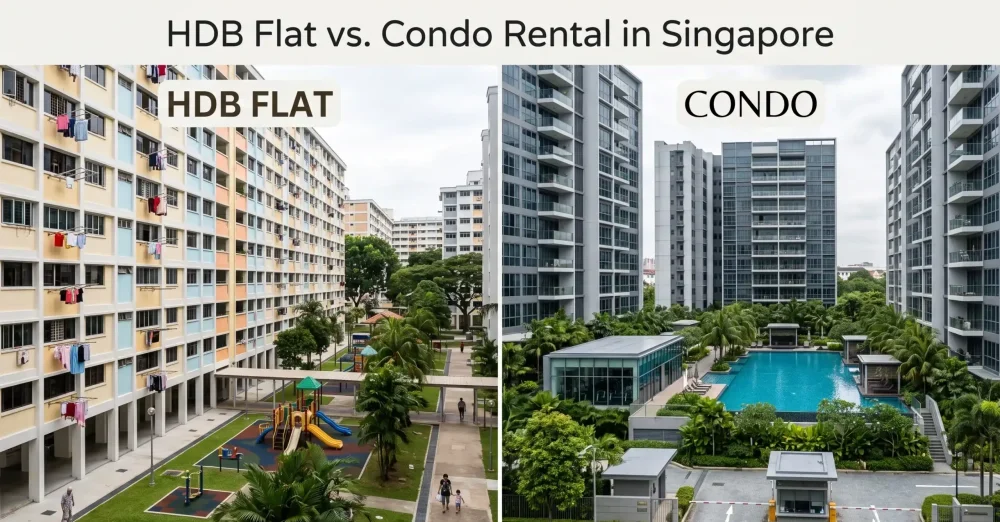
HDB Flat vs Condo Rental in Singapore: Which Fits Your Budget?
Choosing between an HDB flat and a condominium in Singapore is about more than finding a place to sleep. You...
Continue Reading
 12/10/2026
How Much Does It Cost to Raise a Child in Singapore?
How Much Does It Cost to Raise a Child in Singapore? Raising a child in Singapore brings plenty of joy,...
Continue Reading